OTD2
Methus’lah live nine hundred years

I am at the age where parents start falling ill and dying. Where the generational safety net against our mortality—our extinction—falls away and one is left staring wide-eyed into the dark abyss. My mother died two and a half years ago. Recently, the parents of two dear friends had health scares. J, my best friend in the world (if one can still hazard such designations in middle age) called me a few Sundays ago. He was audibly breathless as he cantered to grab his car from the lot, so he could pick up his sister and make a beeline for DC to say the eternal farewell to his mother. After a week of touch-and-go, Mrs. S (as I will call her), is back home. “She may live 6 months, or 6 years, the doctors say, but she’s not dying tomorrow,” J reported, lingering hope perceptible in his voice.
Mr. M, the father of my friend G, has a cavalcade of health issues, all stemming from a failing heart. He’s dropped a frightful amount of weight too quickly, and his kidneys have started to malfunction. His son is unsure how much time he has left.
I love my friends J and G, in the way even male friendship can be a point on the continuum that is love. Usually unexpressed, often wrapped in mocking and busting chops, but reliable and workmanlike, indispensable. These guys have been there for me through thick and thin, and for many years. I have affection for their parents by extension. I cannot say I have spent much time with Mrs. S, but I’ve seen her regularly at her son’s holiday parties, sitting straight-backed, the hint of a smile playing on the edge of her lip, projecting matriarchal dignity, always kind and engaging.
I have many memories of Mr. M: at his son’s bachelor party hanging with the “young guys,” jovially bounding over to me at his firm’s annual March Madness party, cocktail in hand, slapping my back, asking after my life and affairs. I have one especially fond and indelible memory of Mr. M. He and his wife took G and all his law school friends out to a celebratory dinner at the end of our first-year exams. There was something so generous and familial about the whole thing and, for me as a barely-out-of-the-yeshiva sort of guy, desperate to integrate into the world, a (fully paid for!) dinner set against the gargantuan, two-story-high Buddha at Tao, was the marker of a certain achievement.
Neither Mr. M nor Mrs. S are Jewish. And there is a way that some of the tortured questions of religious philosophy are vitiated in the face of real life, and real love. One of a philosophical orientation will eventually come to wonder why a loving, omnipotent God might choose a vanishingly small subset of all those He created in His image as His super-special chosen people, and leave the masses of humanity outside the circle of His primary consideration and affections (and then, if one makes the mistake of articulating the question, one will be on the receiving end of an impressively bottomless and protean torrent of apologetic balderdash). But, in the face of genuine relationships, human connection, actual love, the question isn’t answered, it evaporates. It reveals itself as silliness, as tribalism, as a category error.
One’s decision to leave a religion (or to go OTD, as the vanishingly small subset of all those He created in His image as His super-special chosen people might say) is both overdetermined and indeterminate. As with so many complex life outcomes, there are too many variables, and no control group for a human life. One will have many hypotheses, and no possibility of proving any single one (and, of course, there is never a “single one,” it is multicausal, and dynamic).
One important input to people’s decision (involuntary compulsion?) to leave, I would submit, is having an outside view. Having a toehold, or some vista, outside the rigid, insular borders of their religious community. There are many variations of “outsiderness,” many margins one can inhabit.
My family was mainstream right-wing American charedi. Our family religious ethos was sincere and our observance was fastidious. We summered in a perfectly mainstream, charmingly ramshackle Catskills bungalow colony that was populated by a microcosm of the right-wing frum varietals of the 80’s and 90’s, yeshivish, heimish, chasidish-lite. I attended Lakewood-style yeshivot (yeshivois!).
But I was also raised at multiple intersecting margins. I grew up out of town, in a community with a small Jewish population, and even smaller orthodox one; and, I hasten to add, the orthodox Jews were modern orthodox, a mere generation removed from having mixed dancing (!!!) at the shul dinner dance. My siblings and I had the further inglorious distinction of being the rabbi’s kids, a paradoxical experience where being the center of unwanted religious attention has a marginalizing effect.
Much more crucially, my father is a ba’al teshuvah. A bookish pre-teen, he found orthodox Judaism, and the warmth of the local orthodox rabbi, far preferable to his parents’ suburban 1950’s reform Judaism. My father managed to finagle his way to an orthodox high school, much to his parents’ chagrin, chagrin they were compelled to finance after some light blackmail by the well-meaning (but rather meddlesome) rabbi.
What this meant is that from long before I recognized it explicitly, I knew there were people in the world who I loved very much, with whom I shared a lot of genetic material, who believed very different things than I did. I loved going to my grandparents’ house for Thanksgiving. Not least because they had three (!!!) TVs so the boys could watch Barry Sanders do majestic things between turkey and pecan pie without the girls hectoring us to change the channel, but also because I loved my grandparents, and they loved me. Their relationship with my father was complicated; I have memories of the occasional riotous theological argument, my father and grandfather shouting about some topic that was over my head (Dead Sea Scrolls? Essenes? Troy, Emmitt, and Michael Irvin were playing the second game, priorities people!) but my grandparents just loved us kids, unambivalently and as best they could. It becomes much harder to abide religion’s central, axiomatic “us and them” binary when “them” includes Grandma and Poppy.
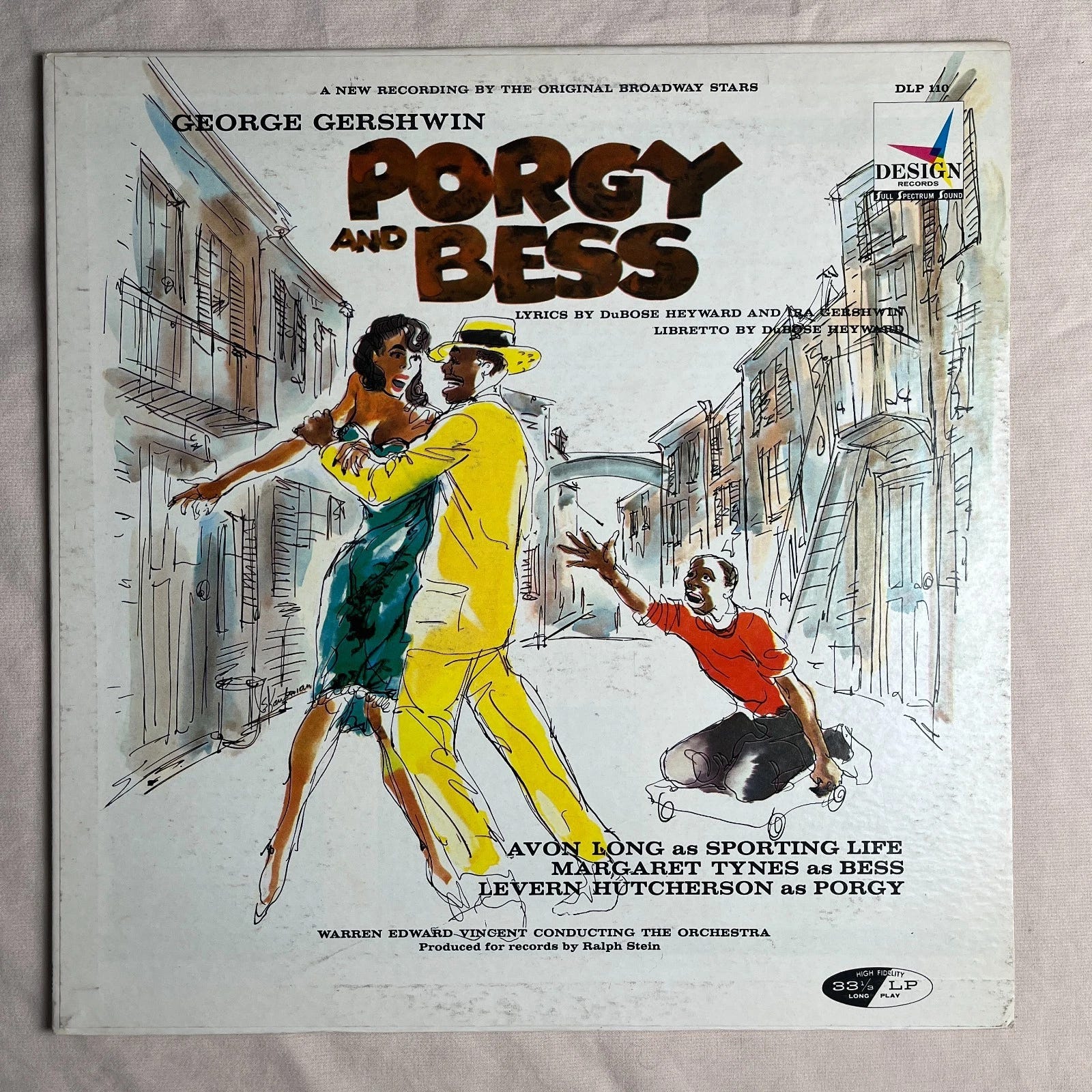
My grandparents would take me and my siblings to the Met, and to Mets games, often followed by sleepovers at their house and a kaleidoscopic variety of sublime sugar cereals for breakfast. I remember one trip with them, three of my siblings sardined with me into the back seat of their maroon Pontiac Bonneville, when a song came over the speakers. To this day I can still hear it sharply:
Methus’lah live nine hundred years, Methus’lah live nine hundred years; But who calls dat livin’ when no gal’ll give in To no man what’s nine hundred years?
Followed by the refrain:
It ain’t necessarily so, It ain’t necessarily so; De things that you’re likely to read in the Bible, It ain’t necessarily so.
I stole a glance at the brother one year younger than me, and we locked eyes, gobsmacked, unsure what to do. Porgy and Bess wasn’t quite Wellhausen, but we were old enough to assimilate that this was biblical criticism. To this day I am unsure whether it was intentional or not. My grandparents did not tend to push their irreligiosity on us. Maybe they just liked show tunes? They’re both dead, so I’ll never know.
Leaving a religion has the quality of looking at a childhood photo of an adult you already know — in retrospect, you can always trace it. The seeds were always there. They’re just invisible until you know what grew from them. People who leave almost always have some crack in the wall before they knew it was a wall. The default for a small child growing up in Boro Park or Lakewood is a hermetic seal. Everyone you know or care about—anyone who rates as a fully embodied human being—believes the things you do. That was not my reality. I grew up on margins, at crossroads, in liminal spaces. My father’s congregants weren’t yeshiva people, my neighbors weren’t Jewish, and my grandparents weren’t believers. I knew all these “outsiders,” was fond of many, and loved some very much. It is perhaps no wonder I have become an outsider now too.